Connect your AI
creative analysis

Adspy creative analysis: the hook, message and transcript of each ad

Adspy creative analysis is a written reading of one ad, produced by an AI model, that covers its hook, key message, visuals, audio, call to action and transcript. Video readings add timestamped key moments; image readings add the focal point, the reading path and the text inside the image.

Media
Video and imageCarousels keep every card in order
Video reading
Hook, moments, transcriptTimings as the analysis recorded them
Image reading
Focal point, text, designText inside the image is extracted
Cost
Included in every planRead with the ad, with fair use
Connect your AISee pricing

Updated

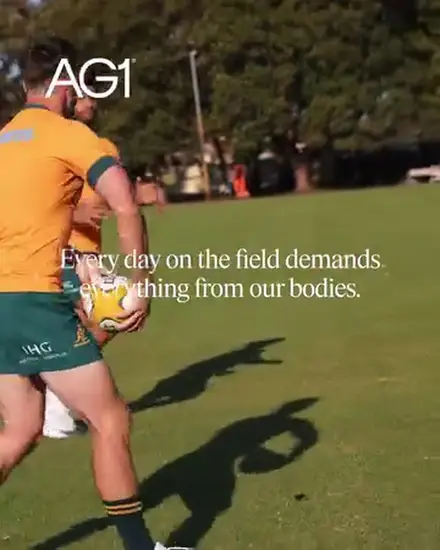
AG1 by Athletic Greens video ad on Meta

Hook0-5 secondsBold Statement

The ad opens with dynamic shots of rugby players in action, interspersed with text overlays stating: 'Every day on the field demands everything from our bodies.' This immediately establishes the context of high physical exertion and the stakes involved.

  1. 0:00–0:05Opening hook
  2. 0:10–0:14Compelling Testimonial
  3. 0:15–0:18Clear Benefit Shot
  4. 0:21–0:25Clear Offer Showcase

Key messageAG1 is a crucial, consistent daily supplement that supports elite athletic performance, as recommended by dietitians and endorsed by trusted sports certifications.

A AG1 by Athletic Greens video ad on Meta, first recorded on 14 September 2026. The hook window and the key moments are the timings written in its analysis; AI timings are approximate. From a snapshot of the shared library taken on 23 September 2026.

What does an Adspy creative analysis contain?

An Adspy creative analysis reads one ad from its first seconds to its call to action and keeps the transcript beside it. Each part below appears when the analysis for that ad contains it; Adspy shows what was written and leaves out what was not.

Hook
How the ad opens, the type of hook and, for video, the time window it covers.
Key message
The main point the ad makes, in one or two sentences.
Visuals
Storytelling and pacing, on-screen text and graphics, style, and how the product is shown.
Audio
Voiceover and script, music, sound effects, and the words the ad repeats.
Call to action
What the ad asks the viewer to do, when it appears, and how clear and visible it is.
Transcript
The words spoken and shown in a video; for an image, the text inside it.
Key moments
Timestamped segments of a video, such as its strongest visual hook.
Strategy
Strengths, watchouts and recommendations, written by the model about the creative.
Summary
The ad's objective and key takeaway, with the model's scores for its execution.

How does the analysis differ for video, image and carousel ads?

Adspy reads video and image ads with different questions. A video reading follows time: the hook window, key moments and transcripts. An image reading follows the eye: the focal point, the reading path and the text inside the image. A carousel keeps its cards in order, with one reading for the creative as a whole.

Video

AG1 by Athletic Greens video ad on Meta

Follows time

Hook window
0-5 seconds, bold statement
Key moments
4 recorded, from 0:00–0:05 to 0:21–0:25
Transcript
“AG1 / Every day on the field demands everything from our bodies. / PERFORMANCE ISN'T BUILT / IN A DAY / IT COMES FROM CONSISTENCY / EVERY MORNING / EVERY SESSION / THE DIETICIANS TOLD ME”

AG1 by Athletic Greens

Image

Glossier image ad on Meta

Follows the eye

Focal point
The duo of perfume bottles in the center of the frame. Their placement and soft lighting make them the immediate subject of attention.
Text in the image
“Glossier. / Save with the Glossier You Duo / Shop now / VALUE / $114 / YOURS FOR / $97”
Value proposition
The value proposition is primarily communicated through the stark price contrast: from $114 to $97. This clear discount is the core of the value being offered.

Glossier

Carousel

Keeps the order

Cards
Shown in their order, with previous and next controls.
Reading
One reading for the creative as a whole, not one per card.
Format tags
Carousel Image, Carousel Video or Carousel Mixed.

No example in the sample

When does the hook land?

Adspy takes hook windows and key moments only from timestamps written in the analysis, checks them against the video's length and never infers them from the transcript. In a sample of 71 analysed videos from the shared library, the hook window was 0–3 s for 39, 0–5 s for 25, 0–4 s for 4, 0–2 s for 3.

Hook windows recorded in 71 analysed videos

  1. 0–2 seconds3 videos
  2. 0–3 seconds39 videos
  3. 0–4 seconds4 videos
  4. 0–5 seconds25 videos
  • Only timestamps written in the analysis are used; nothing is inferred from the transcript or the video.
  • Each moment is checked against the video's length, repeated moments are shown once, and they are sorted by time.
  • Adspy labels them as approximate AI timings.

What happens when an ad has no analysis?

Adspy says so instead of filling the gap. When an ad has no full reading yet, Adspy lists it as missing and charges nothing, and a part the analysis did not write stays empty rather than being filled in from the transcript or the video.

No full reading yet
get_creative_analysis lists the ad as missing and charges 0 credits.
No transcript
The creative says no transcript is available. Adspy does not write one from the video.
No AI tags
The creative carries no tags; they appear after the ad is analysed.

What does each plan include for analysis?

Adspy's plans open the same readings from your AI assistant, included with fair use: a stored reading is read with its ad. Starter covers one source: Meta, Google or TikTok; Pro and above cover every source. Credits pay for results such as a Brand Full Analysis: 2,000 credits a month on Starter and 6,000 on Pro; Unlimited has no credit count (fair use). A reading that does not exist costs nothing.

Creative analysis on each Adspy plan
StarterProUnlimited
SourcesOne of Meta, Google or TikTokMeta, Google and TikTokMeta, Google and TikTok
Full readingget_creative_analysis, includedget_creative_analysis, includedget_creative_analysis, included
TranscriptsIn every search and creative resultIn every search and creative resultIn every search and creative result
Monthly allowance2,000 credits6,000 creditsNo credit count (fair use)
Past fair use1 credit per new ad until the limit resets1 credit per new ad until the limit resetsNew readings wait for the reset

How to read an ad's analysis in Adspy

Adspy's creative analysis opens in your AI assistant, Claude, Claude Code, Codex or any remote MCP client, through the Adspy MCP server. get_creatives returns creatives with their source ads and transcripts, and get_creative_analysis the full reading; both are included in your plan.

In your AI assistant

  1. Connect Adspy to your AI assistant once: Claude, Claude Code, Codex or any remote MCP client. The setup guide has the steps for each.
  2. Ask for the reading, for example "read the hook and call to action of these five ads". The assistant opens the analysis without asking: reading it is included.
  • get_creatives returns creatives with their source ads and existing transcripts.Included
  • get_creative_analysis returns an ad's stored reading; an ad without one says so.Included

What the analysis does not tell you

A model's reading, not a verdict

An AI model writes the analysis. It can misread a scene or a line, so check anything you plan to rely on against the ad itself.

Scores are not results

Readings include the model's scores for creative execution. They are not measured ad performance, and Adspy does not predict how an ad will perform.

Not every ad has a reading

Coverage varies by brand and source. In an exploratory audit of 8 brands on 20 September 2026, the sampled Google advertisers had no analysis records.

No scene-by-scene breakdown

A video reading covers the hook and the moments the analysis highlighted, not every scene. Transcripts carry no timecodes and stay in the ad's own language.

Questions about creative analysis

Is the analysis written when I open an ad?

No. The analysis is written ahead of time in the shared library's pipeline, and Adspy reads it. Opening an ad never generates a new reading: your assistant reads the stored one, included in your plan, or says that none exists.

Do image ads get a transcript?

Image ads have no audio, so Adspy shows the text found inside the image instead. In the sample on this page, 59 of 63 image readings include it.

How complete are video transcripts?

In the sample on this page, 70 of 71 video readings include a content transcript and 59 include an audio transcript. The sample keeps only ads with a full reading, so these counts describe the sample, not the whole library.

Which model writes the analysis?

Each reading records the model that wrote it. In the sample on this page, 132 of the 134 readings were written by a version of Google's Gemini 2.5 Flash-Lite and 2 by Gemini 2.5 Flash.

Can I analyse my own ads?

No. Adspy reads public Meta and Google ads that are in its library. It never connects to your ad accounts.

Sources and method

Examples come from a snapshot of the shared library taken on 23 September 2026: 134 full readings (71 video, 63 image) of English ads chosen because they have a full reading. Their counts describe that sample, not the library's coverage.

The video example is a full-reading ad from that snapshot (AG1 by Athletic Greens); the image example is a Glossier still. Key moments come from the timestamps in each reading, parsed as Adspy parses them.

The coverage note comes from an exploratory, non-representative audit of 8 brands in the shared library on 20 September 2026.

Corrections: info@adspy.sh

Have a brand in mind?

Add Adspy to your assistant with this URL, sign in, and ask about its ads. Connecting takes a few minutes, and no ad account.

Connect your AI
https://www.adspy.sh/mcp